Ontario highlights increased number of attachment!
Ontario entered 2026 with new momentum in primary care attachment.
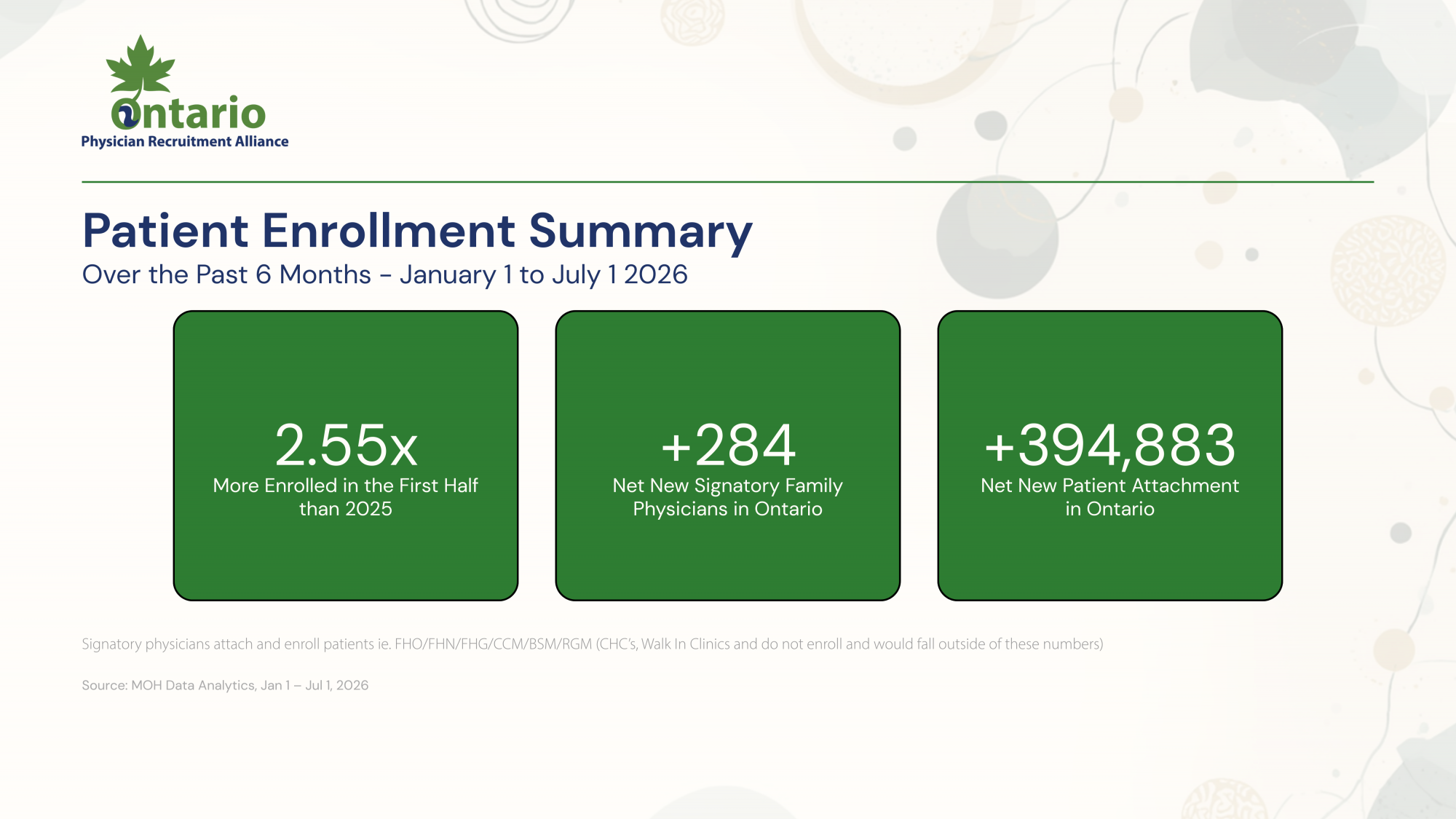
In just six months—from January 1 to July 1—the province added:
- 394,883 net new patient attachments
- 284 net new rostering physicians
That is a major step up from the same period in 2025, when Ontario added 154,625 patient attachments and 177 rostering physicians.
The difference in 2026 vs 2025
2.5× as many patients attached
Ontario added 240,258 more net new patient attachments than during the first six months of 2025—a 155% increase in the pace of attachment.
60% more physicians added
The net increase in rostering physicians rose from 177 to 284.
Behind these numbers are patients who now have a formal primary care relationship with physicians participating in Ontario’s signatory physician enrolment models—and who are accountable for overseeing their ongoing care.
The work is far from finished, but the direction is encouraging: Ontario is not simply adding attachments. It is adding them much faster than it did one year ago.
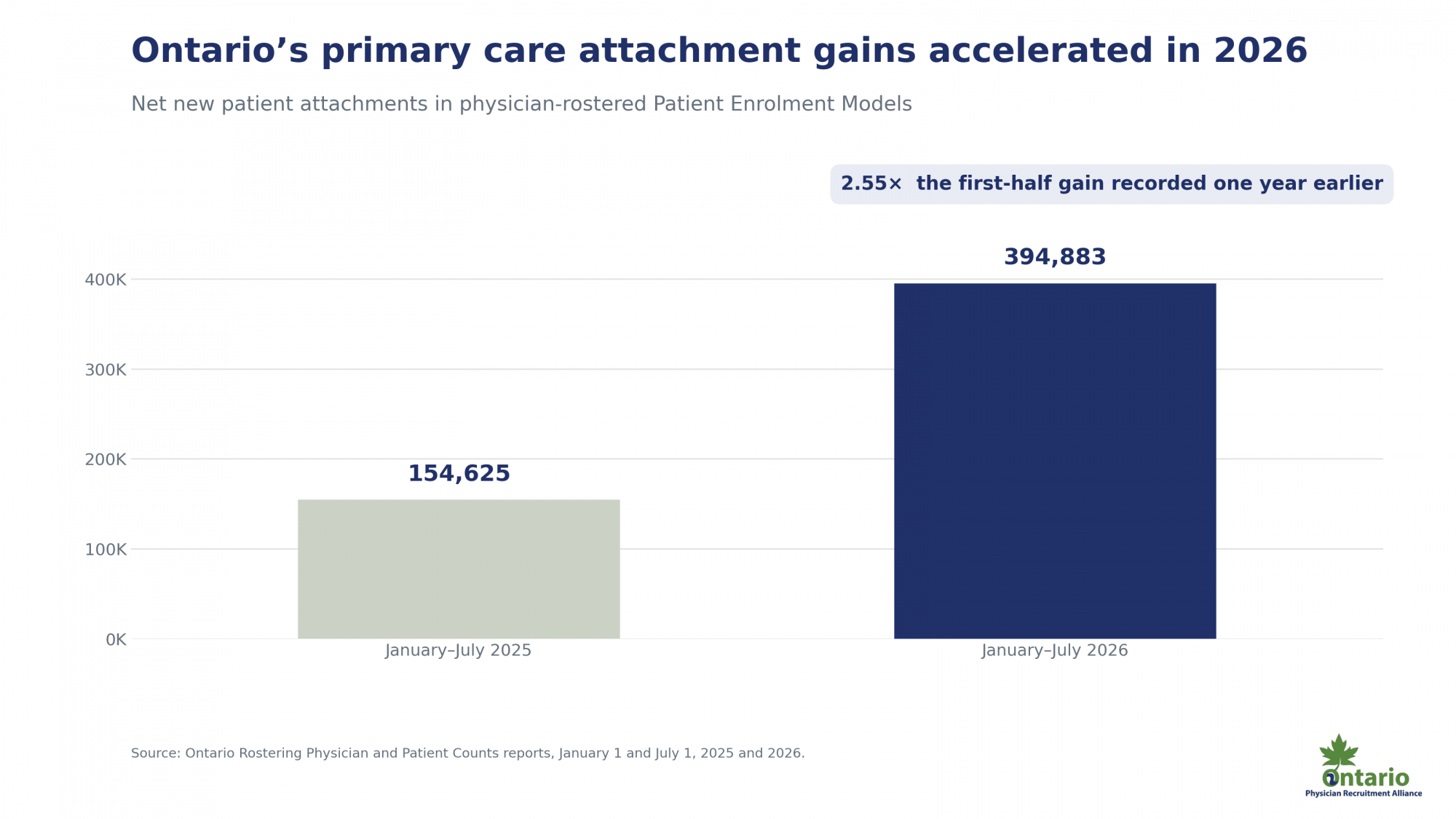
Figure 1. Ontario recorded 394,883 net new patient attachments between January and July 2026, compared with 154,625 during the same period in 2025.
What these numbers mean
The provincial totals come from Ontario’s Rostering Physician and Patient Counts reports. The reports capture patients enrolled in Ontario’s Ministry Patient Enrolment Models and the physicians accountable for those rosters. In core physician-led models such as the Comprehensive Care Model, Family Health Group and Family Health Organization, signatory physicians accept accountability for overseeing the primary care of their enrolled patients. It represents a formal, ongoing relationship between a patient and a physician responsible for their primary care.
The increase of 394,883 represents a real net expansion in the number of patients formally attached through the reported physician-led enrolment system.
Growth beyond a single reporting period – 18 month snapshot
The longer trend also shows consistent growth.
Between January 2025 and July 2026:
- The number of rostered patients increased from 11,448,744 to 12,135,373—a net gain of 686,629, or 6.0%.
- The number of rostering physicians increased from 9,493 to 10,237—a net gain of 744, or 7.8%.
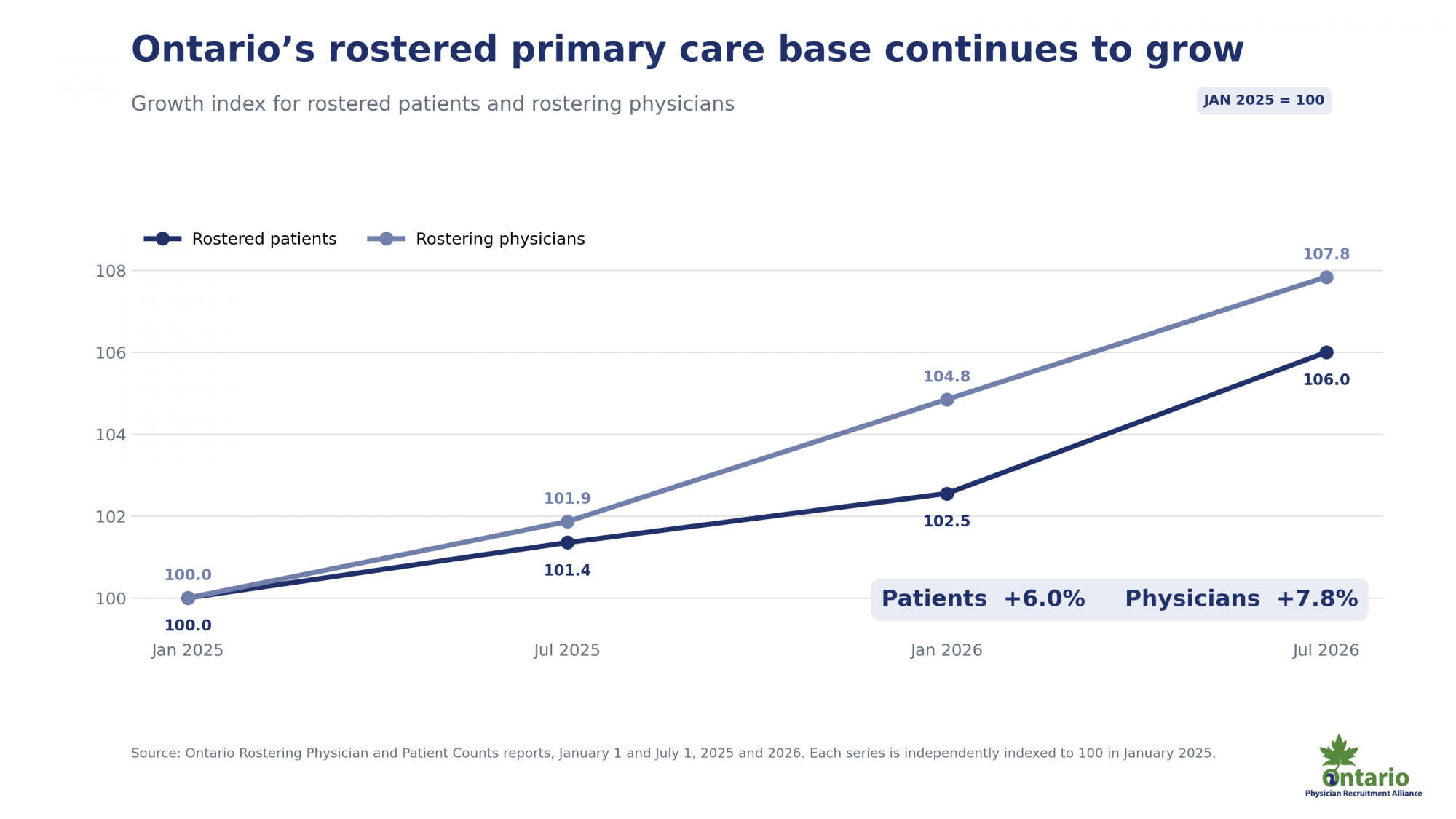
Figure 2. With January 2025 set to an index of 100, Ontario’s rostered-patient count grew to 106.0 and its rostering-physician count grew to 107.8 by July 2026.
The growth index does not suggest that the patient and physician counts were equal at the starting point. It places the two measures on the same scale so their relative growth can be compared.
Ontario’s latest available population estimates also showed the provincial population declining during the first quarter of 2026. A matching July 1 population estimate is not yet available, so a full January-to-July population comparison cannot yet be completed. However, the available data show that the increase in patient attachment was not simply being driven by rapid population growth.
An important part of the attachment picture
Physician rostering is an important measure of attachment, but it is not the entire primary care system.
Community Health Centres, Nurse Practitioner-Led Clinics, Indigenous Primary Health Care Organizations and other interdisciplinary and community-based models also provide comprehensive, ongoing primary care. Their patients and providers are not represented in this physician-roster count due to data availability but their work must be recognized as part of Ontario’s overall progress toward attachment.
The rostering reports also do not tell us whether progress is being experienced equally in every community. Provincial growth can coexist with significant shortages in rural, northern, rapidly growing and historically underserved areas.
These limitations do not diminish the gains. They simply define what this dataset measures: growth in the number of patients formally attached to physicians participating in Ontario’s Patient Enrolment Models.
Momentum worth building on
Ontario still has considerable work ahead to ensure that every resident has access to comprehensive and ongoing primary care.
However, the first six months of 2026 show clear momentum.
Ontario attached 394,883 net new patients through its reported physician-led enrolment models—more than two and a half times the gain achieved during the same period in 2025. At the same time, the province added 284 net new rostering physicians, 60% more than during the comparable period last year. This represents meaningful progress toward Ontario’s attachment goal.
Physician recruiters are an important catalyst behind this progress. They help turn physician interest into real practice starts by connecting candidates with communities, navigating licensure and onboarding, coordinating with clinics and hospitals, and supporting relocation and practice establishment.
While the rostering reports cannot attribute individual physician additions or patient attachments to specific recruitment efforts, the gains reflect the sustained work of recruiters, healthcare organizations, communities and system partners across Ontario. Their role is not simply to fill a vacancy—it is to help create the conditions that allow physicians to establish successful, lasting practices and attach more patients to ongoing care.
The priority now is to sustain that momentum, support every model contributing to attachment and ensure that provincial gains translate into better access in every Ontario community.
Sources: Ontario Rostering Physician and Patient Counts reports dated January 1 and July 1, 2025, and January 1 and July 1, 2026. Population context: Statistics Canada, Table 17-10-0009-01.